
Quick answer
A commercial inflatable obstacle course should be designed around the actual venue, participant group, route length, activity sequence, operator sight lines, entry and exit, and transport plan. Choose obstacles and branding only after the usable footprint and operating flow are understood.
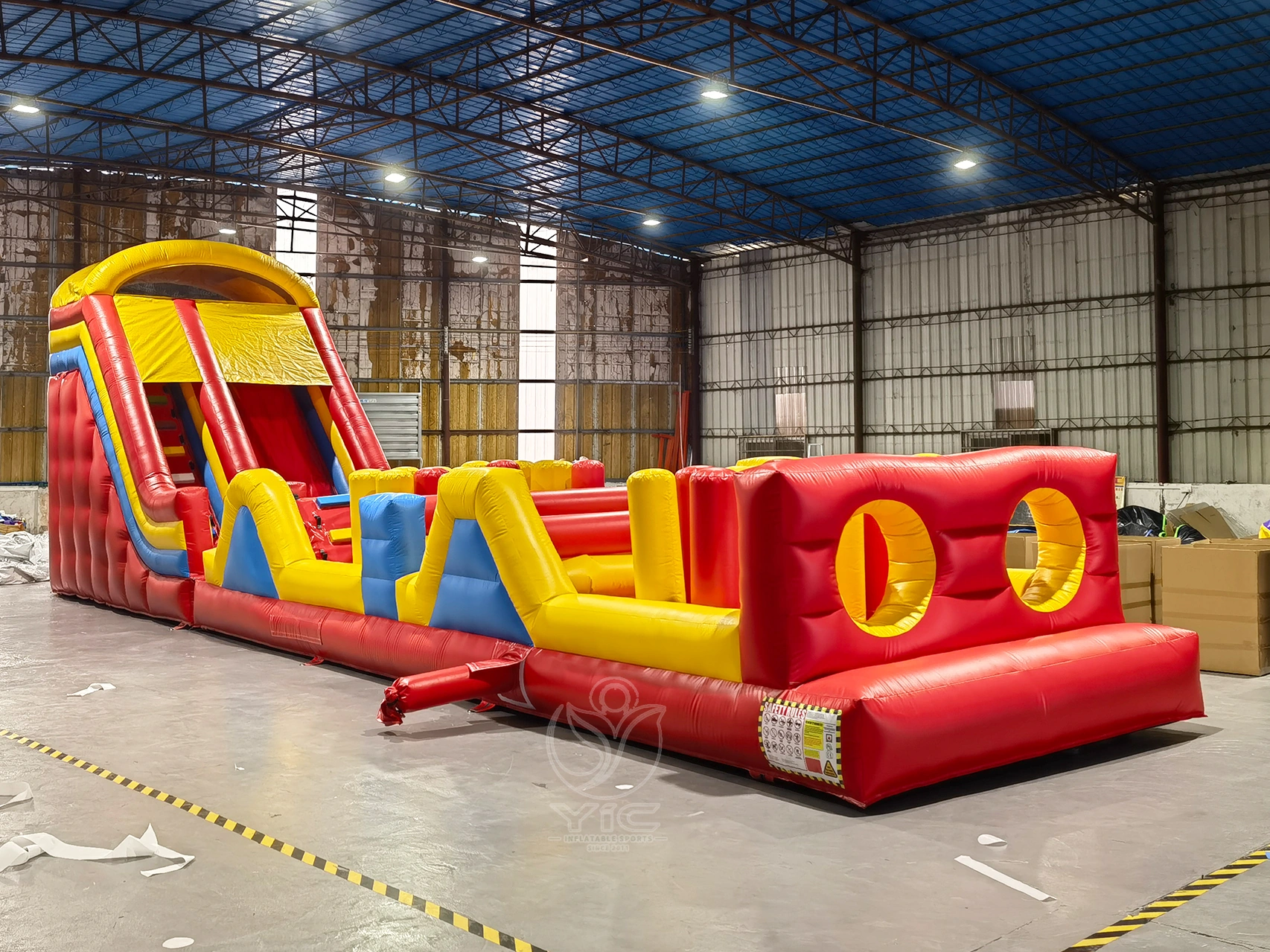
Turn obstacle ideas into a site-fit route
List the activity sequence you need, such as arches, tunnels, crawl-throughs, climbs, barriers, or a finish feature. Then map entry, exit, queue, operator positions, spectators, access, and emergency routes against the usable space. The course drawing should show the route and the footprint together.
Plan challenge, throughput, and supervision together
Consider the intended participant group, whether the format is timed or free-flow, where participants may meet or pass, and how staff can observe the route. Request model-specific operating guidance and review any local venue requirements before the layout is approved.
Compare transport and installation constraints
A long continuous design and a modular layout can have different packing, vehicle, access, setup, and storage needs. Ask for packed dimensions, package count, gross weight, blower or pump details, anchoring requirements, and the installation information needed by the venue team.
Approve artwork and specification as one file
Set the course length, obstacle order, entry and exit, colors, logo placement, and sponsor panels on the same approved drawing. Keep the final artwork revision with the quotation and production file so visual changes do not become ambiguous during manufacture.
Decision before quotation
What this guide means for a commercial buyer
The best course idea is the one that fits the venue, creates a clear participant route, can be supervised, and can be shipped and installed within the project constraints.
Buyer checklist
Information to confirm before comparing suppliers
- Usable length, width, height, access, surface, and emergency route
- Participant group, activity sequence, queue, and operator sight lines
- Entry, exit, passing points, and finish area shown in the drawing
- Packed dimensions, weight, blower, anchoring, and setup responsibilities
- Brand artwork and production revision approved with the final layout
Risk control
Common mistakes to avoid
Choosing activities before measuring usable space
Adding obstacles that block visibility or create route bottlenecks
Designing a course that cannot pass through the delivery access route
Approving brand artwork separately from the final structural drawing
Factory conversation
Questions to send before the order is released
- Can you map the requested activities onto our usable footprint?
- Where are the entry, exit, passing points, and operator positions?
- What packed size, weight, blower, and anchoring information applies?
- Which drawing and artwork revision will control production?
Buyer FAQ
Commercial Obstacle Course Design FAQ
What activities can be included in an inflatable obstacle course?
Common design elements include arches, tunnels, crawl-throughs, barriers, climbing sections, slides, and a finish feature. The final sequence depends on the intended participant group, venue space, operating format, and approved product design.
How do I plan an obstacle course for a school or event?
Share the usable footprint, audience, access route, activity schedule, supervision plan, surface, and any venue requirements. Ask for a drawing that shows course length, entry and exit, queues, operator position, and clearance.
Should I choose a modular or one-piece inflatable course?
Compare the actual layout, packed volume, vehicle access, setup process, storage, and route flexibility. The right option depends on the site and transportation plan, not a general claim that one construction is always better.
Explore relevant commercial inflatables
Compare the product categories that relate to this buying guide, then send YIC the models, quantity, destination, and customization details you want quoted.
Related buyer resources
Talk with a commercial inflatable manufacturer
Have a product list, custom idea, or venue plan? Send your requirements to YIC and include the destination market, quantity, dimensions, artwork, and target delivery date. You can also browse the commercial product catalog.