
Quick answer
Plan a commercial inflatable water park from the water site outward: confirm usable area, depth, access, anchoring, weather exposure, guest flow, supervision, rescue access, storage, and local requirements before selecting modules. Then request a layout and quote that identify each product, connection, document, and shipment responsibility.
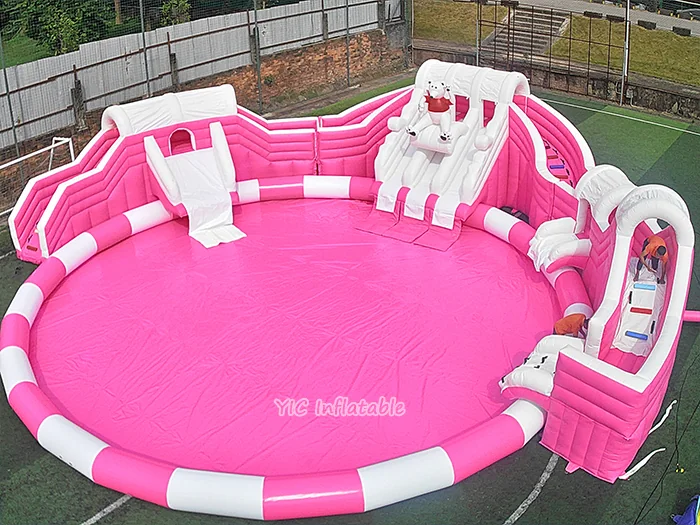
Document the water area before choosing modules
Prepare a site plan with the usable water area, verified depth, shoreline and delivery access, water conditions, anchoring options, weather exposure, power, spectator space, and emergency or recovery access. The responsible venue operator must confirm operating limits and local requirements for the actual site.
Build a mix around guest flow and operations
Map how guests enter, move between modules, queue, exit, and reach staff. Consider slides, climbing elements, floating islands, obstacles, and other listed water attractions only after checking their compatibility with the site, participant group, supervision, and available space. A supplier quotation should identify each module and connection rather than treat the park as an unspecified package.
Specify installation, equipment, and procurement scope
Ask for the proposed layout, module dimensions, connection method, anchoring requirements, inflation equipment, packed dimensions, accessories, and installation responsibilities. Confirm which party handles freight, customs, on-site setup, and any local engineering or operating approvals.
Plan inspection, cleaning, drying, and storage
Agree on pre-use inspection, cleaning, complete drying, repair escalation, packing, and off-season storage procedures with the supplier and venue team. Ask which care instructions and repair materials apply to each product model; do not substitute a generic procedure for the product instructions.
Match documents to the product and destination
List every module and included electrical component, then review the document scope relevant to the product type, intended use, and destination. Keep the final layout, approved product specifications, inspection records, and document revisions together in the project file.
Decision before quotation
What this guide means for a commercial buyer
A water-park equipment order is ready only when the site plan, module layout, operating and emergency plan, document scope, and shipment responsibilities agree.
Buyer checklist
Information to confirm before comparing suppliers
- Water-area dimensions, depth, access, weather exposure, and anchoring review
- Module layout, connections, queues, staff positions, and rescue access
- Product-specific inflation equipment, accessories, packed size, and installation scope
- Destination-market documents and local venue requirements reviewed
- Cleaning, drying, repair escalation, freight, and storage responsibilities assigned
Risk control
Common mistakes to avoid
Selecting modules before site conditions and access are confirmed
Assuming a product list automatically forms a compatible park layout
Leaving anchoring, rescue access, power, or freight responsibility unresolved
Applying the same document or care requirements to every water product
Factory conversation
Questions to send before the order is released
- What site drawing and water information do you need before laying out the modules?
- Which modules and connection details are included in this proposal?
- What anchoring, inflation, access, and installation assumptions does the layout use?
- Which records cover the listed modules and components for our destination?
- What packed shipment and after-sales responsibilities are included?
Buyer FAQ
Planning an Inflatable Water Park FAQ
What information should I send when buying commercial water park equipment?
Share the water-area drawing, verified depth, access and anchoring options, intended use, participant groups, operating season, destination, desired modules, target capacity, and required delivery timing. The venue operator should confirm local operating and emergency requirements.
Which attractions can be combined in an inflatable water park?
Possible catalog categories include slides, floating islands, climbing or obstacle modules, and other water-play products. Compatibility depends on the actual site, connections, water conditions, operating plan, and final approved layout.
Do water park modules use the same compliance documents?
Not necessarily. Document scope depends on the product type, materials, components, intended use, and destination. Review each module and included electrical component individually and confirm local venue requirements.
Can a water park be priced without a site plan?
A preliminary budget may be possible, but a reliable project specification needs usable area, water conditions, access, anchoring, module choices, destination, and delivery scope. These details affect layout and quotation assumptions.
Explore relevant commercial inflatables
Compare the product categories that relate to this buying guide, then send YIC the models, quantity, destination, and customization details you want quoted.
Related buyer resources
Talk with a commercial inflatable manufacturer
Have a product list, custom idea, or venue plan? Send your requirements to YIC and include the destination market, quantity, dimensions, artwork, and target delivery date. You can also browse the commercial product catalog.